
The AI Productivity Paradox: 93% of Devs Use AI Tools, But Productivity Barely Moved

The AI productivity paradox is the growing disconnect between massive AI coding tool adoption - now at 93% among developers - and the stubbornly flat productivity metrics that engineering organisations actually measure. Despite billions spent on Cursor, Copilot, and Claude Code licences, controlled studies show experienced developers are 19% slower with AI tools, while self-reporting they're 20% faster. The gains are real but narrow, and most companies are losing them to bottlenecks they haven't even identified yet.
The Numbers Don't Lie - And They're Uncomfortable
So.. I've been watching this unfold for about a year now, and the data is getting harder to ignore.
In early 2025, METR ran a randomised controlled trial with 16 experienced open-source developers across 246 real tasks. The result? Developers using AI tools (primarily Cursor Pro with Claude 3.5/3.7 Sonnet) took 19% longer to complete tasks than those working without AI. But here's what makes it a paradox: before starting, those same developers predicted AI would make them 24% faster. After finishing, they still believed they'd been 20% faster. A 39-point perception gap between what they felt and what actually happened.
That's not a rounding error. That's a fundamental measurement problem.
And it's not just METR. Faros AI's productivity paradox report tracked engineering organisations at scale and found that at 92.6% monthly adoption and 27% of production code being AI-generated, the aggregate organisational productivity gain was roughly 10%. Not 2x. Not 5x. Ten percent. Meanwhile, 93% of developers report using AI coding tools, which means the per-developer investment is enormous relative to the output.
Where the Productivity Actually Disappears
I've seen this pattern firsthand across fractional CTO engagements. A team adopts Cursor or Copilot. Individual developers start shipping code faster. PRs flood in. And then... nothing moves faster downstream.

The Faros AI data explains why. Developers on teams with high AI adoption complete 21% more tasks and merge 98% more pull requests. Sounds brilliant, right? Until you see that PR review time increases by 91%. The human review process - the thing that actually ensures code quality - becomes the bottleneck that eats every gain AI created.
Think about what that means in practice. Your developers are generating code at 2x the rate, but your senior engineers are now drowning in reviews. The people who should be doing architecture work, mentoring juniors, and making strategic technical decisions are instead spending their days reviewing AI-generated code that's often subtly wrong in ways that take longer to catch than writing it from scratch would have.
And it gets worse. CodeRabbit's analysis found that AI-generated code contains 2.74x more security vulnerabilities than human-written code. Developers spend roughly 9% of their task time - nearly four hours per week - just reviewing and cleaning AI output. That's not productivity. That's a tax.
The Trust Collapse Nobody Talks About
There's a quieter trend underneath the productivity numbers that I find more concerning. Developer trust in AI tool output has dropped from over 70% in 2023 to just 29% in 2026, according to recent survey data. That's a collapse.
What's happening is predictable. Early adopters had high expectations. They generated code fast, shipped it, and then spent weeks fixing the subtle bugs, security holes, and architectural missteps that AI introduced. The honeymoon period is over. Developers now treat AI output with suspicion - which is healthy, but it also means they're spending more cognitive energy verifying than they're saving on generation.
This maps to what I see in AI adoption engagements at Metamindz. The teams that adopted AI tools without structured workflows - just "turn on Copilot and go" - are the ones now dealing with codebases full of plausible-looking code that fails in production. The teams that treated AI adoption as a proper engineering practice change, with oversight protocols and quality gates, are the ones actually seeing sustained gains.
Why Enterprise AI Adoption Is Tearing Companies Apart
Writer's 2026 enterprise AI report put a number on what many CTOs already feel: 79% of organisations face challenges in adopting AI - a double-digit increase from 2025. And 54% of C-suite executives admit that adopting AI is "tearing their company apart."
That 54% figure deserves a pause. More than half of executives at large companies say AI adoption is creating internal conflict. Not "minor challenges." Tearing apart.
The reasons are structural:
| Problem | Typical Approach | CTO-Led Approach (Metamindz) |
|---|---|---|
| AI tool rollout | Buy enterprise licence, email everyone to use it | AI maturity assessment per engineer, tailored workflow design per team |
| Quality control | Hope existing code review catches AI mistakes | Explicit AI oversight protocols: what AI can touch (boilerplate, tests) vs what it can't (auth, payments, data models) |
| Measuring ROI | Count lines of code or PR velocity | Track end-to-end delivery metrics: cycle time, deployment frequency, change failure rate (DORA) |
| Training | Send a link to a webinar | Hands-on workshops where engineers build with AI on their actual codebase |
| Security governance | 67% have already had a data leak from unapproved AI tools | Security-focused AI usage guidelines with clear boundaries and approved tool list |
| Review bottleneck | Senior devs drown in PR reviews, architecture work stalls | AI-assisted code review triage, structured review checklists, review load balancing |
The pattern I keep seeing: companies treat AI adoption as a procurement decision ("we bought Cursor Enterprise") when it's actually an engineering practice transformation. You don't just give developers AI tools. You redesign how your entire SDLC works around them.
The 5x Super-User Gap
Not all the news is bad. There's a fascinating split in the data. AI "super-users" - developers who have deeply integrated AI into structured workflows - deliver 5x productivity gains. But only 29% of organisations see significant ROI from generative AI overall.
That gap tells you everything. The tool isn't the problem. The implementation is.
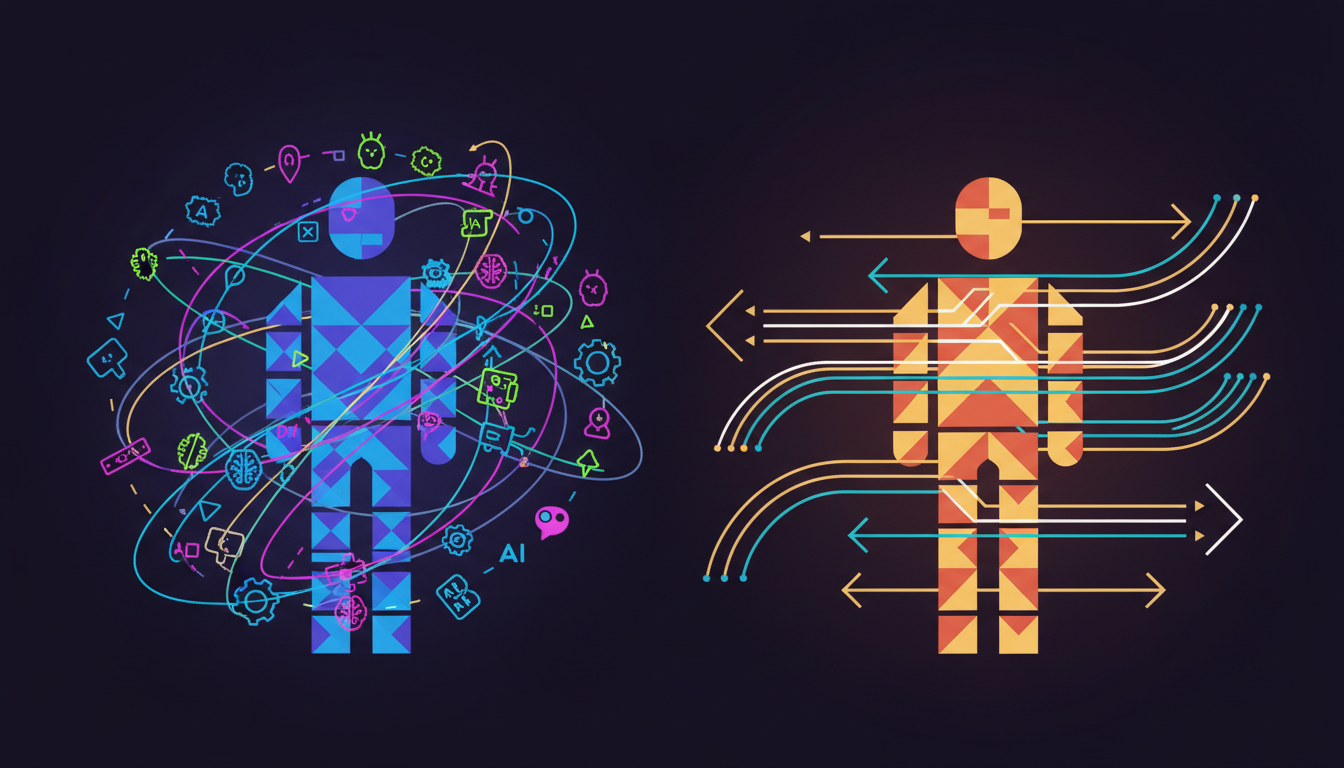
The super-users aren't just people who use AI more. They're people who use it differently. They've built personal workflows: using AI for specific tasks where it excels (boilerplate generation, test writing, documentation, refactoring), maintaining human judgment for tasks where AI fails (architecture decisions, security-critical code, data model design). They treat AI as a tool with specific strengths and weaknesses, not as a magic productivity multiplier.
At Metamindz, when we run AI adoption programmes for engineering teams, the first thing we do is an AI maturity assessment - not of the team, but of each individual engineer. Some people learn by diving in. Others need structured guidance. Some are sceptical (often rightly so). A one-size-fits-all rollout guarantees that you'll get a handful of super-users and a majority of people who use AI just enough to create problems.
56% of the Workforce Has Had Zero AI Training
This one floored me. More than half of the global workforce reports receiving no recent training on AI tools, and 57% lack access to mentorship opportunities. Companies are spending millions on AI tool licences while spending nearly nothing on teaching people how to use them properly.
It's the equivalent of buying everyone a Formula 1 car and then wondering why there are crashes on the motorway. The tool is capable. The operators aren't prepared.
And this is where the fractional CTO model becomes especially relevant. A full-time CTO at a Series A startup might not have the bandwidth or the specific AI adoption expertise to design and run a proper training programme. A fractional CTO who's done this across 10 different teams, across different tech stacks and team cultures, brings pattern recognition that you can't get from reading blog posts (even this one).
What Actually Works: Lessons From Teams Getting Real Gains
After working with engineering teams on AI adoption over the past year, here's what I've found separates the teams that get real, sustained productivity improvements from those stuck in the paradox:
1. They measure the right things. Not lines of code. Not PR count. Cycle time from commit to production. Change failure rate. Mean time to recovery. DORA metrics that actually correlate with delivery performance. If your AI adoption doubled your PR count but your cycle time didn't improve, you haven't gained anything - you've just moved the bottleneck.
2. They define where AI is allowed and where it isn't. Authentication code? Human only. Payment processing? Human only. Data model design? Human only. Boilerplate CRUD endpoints, test generation, documentation, refactoring safe patterns? AI-assisted. This isn't about limiting AI - it's about focusing it where the risk-reward ratio actually makes sense.
3. They redesign their review process. The 91% increase in PR review time is a design problem, not an inevitability. Teams that use AI-assisted review triage (using tools like CodeRabbit or PR-Agent), structured review checklists for AI-generated code, and dedicated review rotations handle the increased volume without burning out their senior engineers.
4. They invest in AI-specific training. Not a webinar. Not a Slack channel with tips. Actual hands-on workshops where engineers work on their own codebase with AI tools, guided by someone who's seen what works and what doesn't. At Metamindz, we run these as part of our AI adoption programme - engineers learn by doing, on their own code, with their own tools.
5. They track individual AI maturity. Not everyone adopts at the same pace. Some engineers become super-users in weeks. Others need months. A good AI adoption programme meets people where they are, not where you wish they were.
So What's the Bottom Line?
AI coding tools work. The 5x super-user gains are real. The technology is genuinely transformative. But the way most companies are adopting it - buy licences, hope for the best - is producing a measurable 10% gain at the cost of increased security vulnerabilities, review bottlenecks, declining developer trust, and internal organisational conflict.
The paradox isn't that AI doesn't work. It's that AI adoption without engineering leadership doesn't work. And that's a problem a Cursor licence can't solve.
If you're a CTO or founder watching your AI tool spend climb while your delivery metrics stay flat, the fix isn't more tools. It's structured adoption with proper oversight. That's what we do at Metamindz - not sell you AI tools, but help your engineering team actually use them in a way that shows up in the metrics that matter.
Book a free discovery call and we'll tell you honestly whether you need help or whether you're already doing it right.
Frequently Asked Questions
Why are AI coding tools not improving developer productivity?
AI coding tools accelerate code generation but create downstream bottlenecks in code review, testing, and deployment. METR's controlled study found developers are 19% slower with AI tools on familiar codebases. The gains exist at the individual task level but are absorbed by increased review time (91% longer) and quality issues (2.74x more security vulnerabilities in AI-generated code).
What is the AI productivity paradox in software development?
The AI productivity paradox describes the gap between high AI coding tool adoption (93% of developers) and flat organisational productivity metrics (roughly 10% aggregate gain). Developers perceive themselves as 20% faster, but controlled measurements show no improvement or even slower completion times. The paradox exists because code generation speed is only one part of the software delivery lifecycle.
How can engineering teams actually benefit from AI coding tools?
Teams that see real gains (up to 5x for super-users) define clear boundaries for AI usage, redesign their review processes for higher PR volume, invest in hands-on AI training, and measure end-to-end delivery metrics like cycle time and change failure rate rather than vanity metrics like lines of code or PR count. Structured AI adoption as an engineering practice change, not just a tool purchase, is what separates winners from the paradox.
Should startups invest in AI coding tools in 2026?
Yes, but with structured adoption. The tools themselves are capable - AI super-users see 5x productivity gains. The risk is unstructured adoption: 67% of companies have already experienced data leaks from unapproved AI tools, and 79% face significant adoption challenges. Start with an AI maturity assessment, define usage boundaries, and invest in proper training before scaling tool licences.
What does a fractional CTO do for AI adoption?
A fractional CTO brings cross-team pattern recognition from multiple AI adoption engagements. They assess each engineer's AI maturity, design structured workflows for the team's specific tech stack, establish security and quality governance protocols, run hands-on training sessions, and set up measurement frameworks using DORA metrics to track real delivery improvements rather than vanity metrics.