
How to Build Accountability in Remote Teams
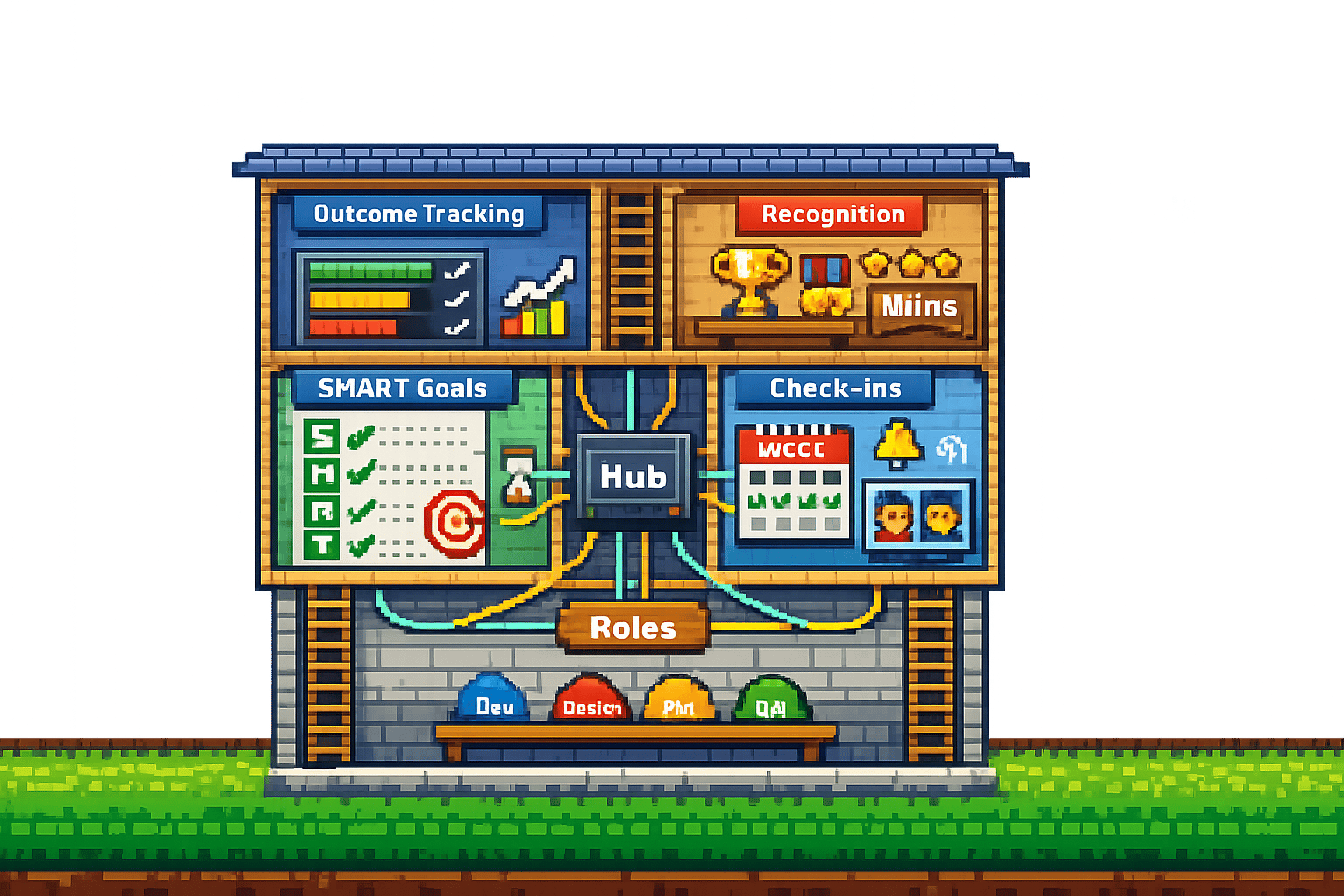
How to Build Accountability in Remote Teams
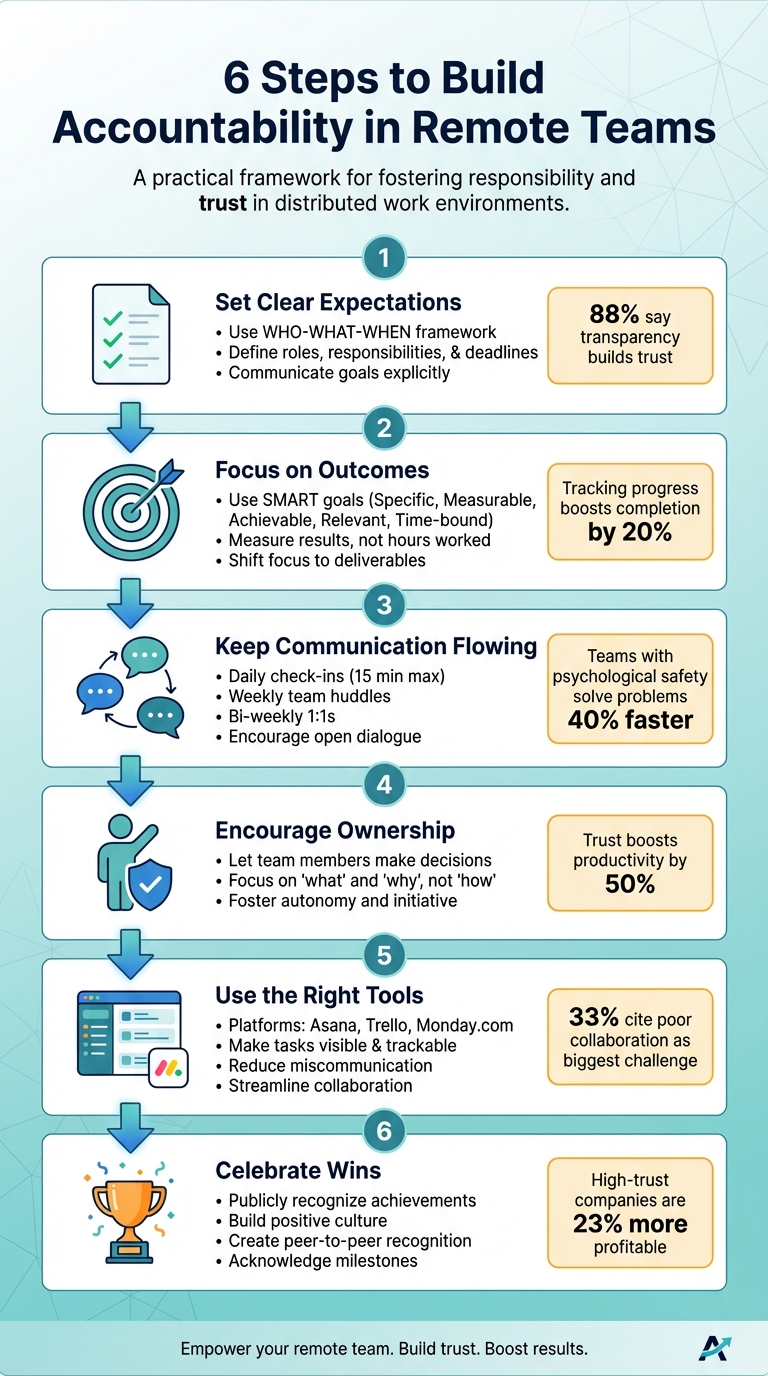
Remote teams thrive on trust, clarity, and communication - without these, things can fall apart fast. Here’s the short version of how to keep your team accountable without micromanaging:
- Set Clear Expectations: Define roles, responsibilities, and deadlines. Use the WHO-WHAT-WHEN framework to avoid confusion.
- Focus on Outcomes: Measure success by results, not hours worked. Use SMART goals (Specific, Measurable, Achievable, Relevant, Time-bound).
- Keep Communication Flowing: Daily check-ins, weekly team huddles, and 1:1s keep everyone aligned without wasting time.
- Encourage Ownership: Let team members make decisions within clear boundaries. Trust boosts productivity by 50%.
- Use the Right Tools: Platforms like Asana or Trello make tasks visible and reduce miscommunication.
- Celebrate Wins: Publicly recognise achievements to motivate the team and build a positive vibe.
Practical example: Instead of asking, "Why isn’t this done?" during check-ins, ask, "What support do you need to meet your goals?" It’s a small shift, but it builds trust and accountability.
Want to dig deeper? Let’s break it all down step by step.
6 Steps to Build Accountability in Remote Teams
Managing a Growing Remote Team | Achieving Accountability & Productivity"
sbb-itb-fe42743
Set Clear Expectations and Define Accountability
Remote teams don’t have the luxury of picking up on in-person cues, so it’s crucial to document roles, responsibilities, and deadlines explicitly. When there’s ambiguity, tasks can slip through the cracks, get duplicated, or worse, lead to finger-pointing when things go wrong.
Shifting from an office-based mindset to a remote one means ditching the old "butts in seats" measure of productivity. Instead, focus on deliverables and outcomes. Clear roles and shared tools make it easier to hold everyone accountable without micromanaging.
Define Roles and Responsibilities
Accountability starts with clarity. Each team member needs to know exactly what’s expected of them and how their work fits into the bigger picture. This isn’t about breathing down their necks - it’s about giving them the structure they need to thrive.
The WHO-WHAT-WHEN framework is a lifesaver here. For every task, spell out:
- Who is responsible for it.
- What the deliverable is.
- When it’s due (use the DD/MM/YYYY format for consistency).
Also, make sure reporting lines are clear. Everyone should know who has the final say on decisions for each task. This avoids the classic "I thought you signed off on it" scenario.
Document these details in project management tools. Verbal agreements are easily forgotten, especially in remote setups. A written record keeps everyone on the same page. And let’s face it, transparency is a big deal - 88% of people say it’s the key to building trust within a team [2].
Set SMART Goals
Vague goals like "do better" or "increase engagement" just don’t cut it for remote teams. Instead, use the SMART framework: make every goal Specific, Measurable, Achievable, Relevant, and Time-bound.
For instance, instead of saying "improve customer support", go for something like "Reduce average response time from 24 hours to 12 hours by 30/09/2026." See the difference? It’s crystal clear, leaves no room for misinterpretation, and naturally encourages accountability. Plus, tracking progress has been shown to boost project completion rates by 20% and engagement by 15% [2].
Get your team involved in setting their own goals and metrics. It’s a great way to keep them motivated and invested. Track both leading indicators (the daily actions they control) and lagging indicators (the end results) to spot any issues before they snowball.
Clarify Deadlines and Priorities
In a remote setup, workers need to know exactly what’s expected of them, how success is measured, and when things are due. Without that clarity, deadlines get missed, and priorities get muddled.
Set up a centralised digital workspace using tools like shared calendars and task boards. Make sure everyone can see who’s doing what and when key milestones are coming up. This visibility turns individual accountability into a team effort, as everyone’s progress impacts the group’s success.
Tie daily tasks to bigger organisational goals so that employees can see the "why" behind their deadlines. Understanding the purpose behind their work not only keeps them engaged but also helps them prioritise when juggling multiple tasks.
These practices have been shown to boost profitability by 23% and overall performance by 18% [2].
With roles, goals, and deadlines nailed down, the next step is to ensure regular communication to keep everyone aligned.
Maintain Regular Communication
Once roles and goals are set, keeping the lines of communication open is critical for maintaining accountability.
Remote teams don’t have the luxury of casual chats by the coffee machine or quick drop-ins to clarify things. Without regular communication, misunderstandings can pile up, and minor issues can turn into major headaches. The solution? A structured communication rhythm that keeps everyone in sync without drowning them in endless meetings. This rhythm builds on the clear expectations you’ve already set.
Start with short daily or bi-daily check-ins - 15 minutes tops. Use tools like Slack or Teams to keep them asynchronous and protect those precious deep work hours. Keep it simple and focused: What did you finish? What’s next? Any blockers? These quick updates keep everyone visible and informed without the need for constant video calls.
Next, hold weekly team huddles. These aren’t just about reporting to the boss - they’re about fostering peer accountability. When team members see how their work impacts others, it naturally motivates them to stay on track. In fact, research shows teams with high psychological safety solve problems 40% faster and are 30% more committed to quality standards [3].
Finally, schedule bi-weekly one-on-ones. These should focus on professional growth and removing obstacles. Video calls are ideal here, especially for constructive feedback. Caitlin Collins, Programme Strategy Director at Betterworks, explains it perfectly:
"Everyone needs feedback to improve... The goal of feedback should always be forward-looking, aimed at improving clarity and providing direction and help as needed to enable the employee to improve" [2].
Schedule Regular Check-ins
Effective check-ins aren’t about grilling someone on why something isn’t done. Instead, shift the focus to support. Ask questions like, "What help do you need from me to meet your commitments?" This approach builds trust and encourages collaboration rather than creating resentment.
Consistency is key. Standardise your check-in questions and make sure discussions are documented. Tasks involving multiple steps or stakeholders should be especially well-documented. It’s worth noting that the U.S. economy loses 50 million hours of productivity daily due to undocumented tasks [2]. A little organisation goes a long way.
For an extra layer of accountability, pair team members as accountability partners. These partnerships allow them to discuss progress and challenges together, reducing the need for constant manager involvement. This can also help combat feelings of loneliness - a common issue for 20% of remote workers [1].
Use Multiple Communication Channels
Not all conversations belong on the same platform. Use asynchronous tools like Slack or Teams for quick updates and flagging blockers, and save video calls for more detailed discussions or feedback where tone and body language matter.
Set clear communication guidelines to avoid the trap of constant availability. For example, you might set expectations like responding to Slack messages within two hours and emails within 24 hours. This ensures people can focus on their work without feeling tethered to their inbox.
Shared project management tools like Asana, Monday.com, or Trello can make dependencies visible. When everyone knows who’s working on what and when, accountability becomes a team effort rather than just a manager’s job. Transparency helps people see how their work impacts others, which naturally boosts performance.
And don’t forget about the social side of things. Remote work can be isolating, so schedule monthly virtual coffee chats or create informal Slack channels for non-work conversations. These little touches go a long way in keeping teams connected.
Create Feedback Loops
Regular feedback is the glue that holds accountability together. It ensures everyone stays on track and keeps improving.
Frequent, light-touch feedback helps nip small issues in the bud before they grow. Build this into your routine with retrospectives where team members reflect on what they committed to, what they delivered, and what they learned. This makes accountability a shared effort rather than something imposed from above.
Create environments where constructive feedback feels safe to give and receive. Celebrate "accountability wins" publicly to encourage a positive atmosphere, but keep sensitive performance feedback private to maintain psychological safety.
Use surveys or dedicated feedback sessions to gather input regularly. Focus on results rather than processes - measure the value created, not whether someone was online at 9 a.m. Companies with engaged teams are 23% more profitable and 18% more productive [2], and consistent feedback plays a huge role in that engagement.
Promote Autonomy and Ownership
Once you’ve got clearly defined roles and regular communication in place, the next step is to encourage autonomy. Why? Because real accountability doesn’t come from constant oversight - it comes from empowering people to make decisions and take ownership of their work. When team members feel trusted to handle their responsibilities, they naturally become more invested in the outcomes. It’s all about focusing on results, not micromanaging the process.
Remote teams perform best when managers set the direction - the "what" and "why" - but let individuals figure out the "how." This approach respects each person’s expertise and working style while keeping everyone aligned with the end goal. There’s even research to back this up: employees in high-trust environments report 50% higher productivity compared to those in low-trust workplaces [2].
The key is to establish clear decision-making boundaries and evaluate success based on outcomes, not activities. Done right, this not only speeds up workflows but also creates a culture where people feel genuinely invested in their work.
Focus on Outcomes, Not Processes
Forget tracking irrelevant metrics like how many hours someone spends online or how quickly they respond to emails. These don’t show the value someone’s creating. In fact, only 14% of employees strongly agree that their performance is managed in a way that motivates them [1]. That’s a shocking statistic, isn’t it?
Instead, shift the focus to deliverables and measurable results. For example, developers could be assessed on completed sprint tasks, and customer support teams on issue resolution times and satisfaction scores. By measuring outcomes instead of activity, you give people the freedom to work in a way that suits them - whether they’re early birds or night owls.
Here’s a tip: involve your team in creating their success metrics. When people help define what “success” looks like, they’re much more likely to take ownership of achieving it [2][3]. Use the SMART framework (Specific, Measurable, Achievable, Relevant, and Time-bound) to ensure everyone knows exactly what they’re working towards. No ambiguity, no confusion.
This approach doesn’t just improve accountability - it also sparks creativity. With clear boundaries like deadlines and quality standards, people are free to experiment and find innovative ways to hit their targets.
Once you’ve got these metrics in place, the next step is to hand over decision-making authority.
Delegate Decision-Making Authority
Outcome-based management works best when paired with clear guidelines for decision-making. Too much managerial approval slows everything down and frustrates your team. By defining who can make which decisions, you eliminate bottlenecks and give people the chance to step up and develop their leadership skills.
Start by documenting decision-making roles. A RACI chart (Responsible, Accountable, Consulted, Informed) can be a lifesaver here. For instance, a senior developer might have the authority to decide on technical solutions within a given framework, while a marketing lead could approve social media campaigns below a certain budget.
Be clear about when decisions need to be escalated. For example, you might say: “You can approve expenses up to £500 without asking, but anything above that needs my sign-off.” This kind of clarity avoids unnecessary back-and-forth and ensures no one oversteps their authority.
Transparency is just as important as delegation. When someone makes a decision, encourage them to explain their reasoning to the team. This helps everyone learn from the process, builds trust, and creates a stronger sense of shared purpose across the organisation.
Use Tools for Transparency and Tracking
Once your team has the freedom and authority to make decisions, it's crucial to keep tabs on progress in a way that's clear and accessible. The right tools can do more than just track tasks - they help everyone understand who’s responsible for what, when things are due, and how all the pieces come together. This isn’t about micromanaging or spying; it’s about creating visibility so everyone stays aligned and accountable without endless check-ins.
Here’s something to chew on: 33% of remote workers say their biggest challenge is poor collaboration and communication [6]. And it’s not because they’re slacking off - it’s often because vital information is scattered across emails, chats, and random to-do lists. When no one has a clear view of progress, accountability takes a hit. The fix? Centralised tools that make transparency a natural part of how you work.
Adopt Collaborative Platforms
Project management platforms like Asana, Trello, Monday.com, and ClickUp can act as your team’s digital HQ. They show tasks, deadlines, and who’s responsible for what - all in real time. This stops the "I didn’t know it was my job" or "I thought someone else was on it" excuses. When everything’s laid out for everyone to see, it’s harder for things to fall through the cracks.
These tools also encourage peer accountability. When your progress (or lack of it) is visible to the team, there’s a natural push to stay on track - not out of fear, but because nobody wants to be the one holding things up. For engineering teams, platforms like GitHub or GitLab take it a step further by making code reviews and commit histories accessible to the whole team, fostering accountability through transparency [3].
To keep communication seamless, integrate tools that allow for a searchable record of decisions and commitments. This is a lifesaver when someone inevitably asks, “Wait, what did we agree on last week?” Centralising conversations helps reduce misunderstandings and creates a clear trail of who promised what.
Here’s a tip: don’t let “app fatigue” creep in. Choose tools that combine multiple functions. For example, Pebb merges task management, chat, and shift scheduling into a single platform, cutting down on the need to switch between apps [2]. The fewer tools your team has to juggle, the more likely they’ll actually use them.
Track Key Metrics and Goals
Tracking tasks is important, but it’s even better when those tasks tie into larger objectives. This is where OKRs (Objectives and Key Results) and KPIs (Key Performance Indicators) come in handy. They turn accountability into something measurable rather than a matter of opinion.
For example, a developer might have a KPI around completing sprint tasks, while a customer support team could measure issue resolution times and customer satisfaction scores. The focus should be on outcomes, not just activity. And here’s a stat to consider: only 14% of employees feel their performance is managed in a way that motivates them [1]. Tracking hours or “active status” won’t inspire anyone - it just builds resentment.
Shared dashboards are a great way to display metrics in real time. Tools like TrackingTime give a neutral snapshot of what’s overdue, what’s coming up, and what’s on track - all without feeling intrusive [6]. This lets team members check updates themselves instead of waiting for meetings or pestering their manager.
One thing to avoid at all costs? Surveillance tools like keystroke logging or screenshot monitoring. While they might seem like an easy way to enforce accountability, they often backfire. Companies that use these invasive tools see 27% higher voluntary turnover within six months [3]. Trust is fragile, and once it’s broken, it’s hard to rebuild.
With the right tracking tools in place, you can take things a step further with expert guidance to fine-tune your systems.
Consider Metamindz Services for Tech Teams
If your tech team is already working on accountability systems, integrating new tools into your existing workflows can be tricky. The tools need to fit your processes, not disrupt them, and they should scale as your team grows. This is where having experienced guidance can make all the difference.
Metamindz offers fractional CTO services and architectural reviews tailored for remote teams. Whether it’s rolling out a new project management platform, syncing time-tracking tools with your current setup, or ensuring your development workflows are efficient, their CTO-led approach provides hands-on help. They’ll work directly with your team - through shared Slack channels, weekly check-ins, and daily updates - so you’re not left to figure it all out on your own.
For startups and scale-ups, this kind of support ensures you’re building systems that actually help, rather than adding unnecessary admin. And because Metamindz is led by seasoned CTOs and engineers, they understand the unique challenges of remote tech teams in a way that traditional consultancies often don’t. It’s a smart move for any team looking to strengthen accountability and transparency without adding extra headaches.
Recognise Achievements and Build a Supportive Culture
Tracking progress is important, but recognising achievements and creating a supportive atmosphere can make accountability feel less like a chore and more like something to aim for. If people only hear about their mistakes, they might start hiding issues instead of tackling them head-on. On the flip side, celebrating wins can shift accountability into something positive - something that motivates rather than intimidates. Regular recognition, done in a visible way, can bridge the gap between managing performance and keeping everyone engaged.
Celebrate Successes
A bit of public recognition goes a long way. It not only lifts spirits but also sets clear examples of what success looks like. Whether someone nails a tough deadline, delivers a tricky feature, or steps in to help a colleague at just the right moment, those moments deserve a shout-out. Tools like Bonusly and WorkTango make it easy for team members to show appreciation for each other, creating a culture where recognition isn’t just top-down but peer-to-peer as well[4].
Take Monzo, the UK-based online bank, as an example. They use a recognition platform to let remote team members celebrate each other's contributions. This has been a big part of building their culture of appreciation[4].
GitLab also has a standout approach with its "Quarterly Achievers" programme. Back in October 2025, they spotlighted 15 team members in categories like "Engineering Excellence" and "Customer Results." These winners, chosen through peer nominations, were recognised by leadership and even got a celebratory expense to mark the occasion. It’s a clear signal of what success looks like and how it’s rewarded[7].
To keep the momentum going, some teams set up regular rituals like "Win Wednesday" or monthly highlights in a dedicated Slack channel. These practices ensure that achievements don’t go unnoticed and that everyone knows what it takes to excel[2][4]. When recognition becomes a consistent part of the culture, it also helps reframe setbacks as learning opportunities rather than failures.
Create a Safe Space for Learning
If people are too scared to admit mistakes, problems can fester until they blow up into something far worse. The key is to foster an environment where it’s OK to fail. Teams with high psychological safety are not only quicker at solving problems - by about 40% - but they’re also 30% more committed to maintaining quality standards[3].
Leaders play a big role here. By being open about their own mistakes, they set the tone for transparency and create a safe space for others to do the same. Hosting "show-and-learn" sessions - where team members share what went wrong and what they learned - turns setbacks into opportunities for growth[5].
When it’s time to give feedback, focus on what’s next rather than what went wrong. Caitlin Collins, Programme Strategy Director at Betterworks, puts it perfectly:
"Everyone needs feedback to improve... The goal of feedback should always be forward-looking, aimed at improving clarity and providing direction and help as needed to enable the employee to improve"[2].
Instead of lingering on past errors, guide the conversation towards actionable steps for the future. And for those trickier conversations, video calls can help. They allow you to convey tone and empathy, which makes the feedback feel constructive rather than critical. This approach keeps feedback productive while still supporting the broader accountability framework of the team.
Conclusion
Creating accountability in remote teams isn’t about keeping tabs on every move - it’s about fostering an environment where people feel empowered to take ownership. By focusing on outcomes rather than micromanaging activities, teams can perform at their best, even when working apart.
The numbers back this up. Teams that feel psychologically safe solve problems 40% faster and are 30% more committed to quality standards[3]. On the flip side, organisations relying on surveillance tools face a 27% spike in voluntary turnover within just six months[3]. The message is clear: trust, not tracking, is the cornerstone of lasting accountability. As Barbara Kimmel Brooks wisely said:
"Trust starts with trustworthy leadership. It must be built into the corporate culture"[2].
The strategies we’ve explored - setting SMART goals, ensuring clear communication, and leveraging collaborative tools - are all designed to build this foundation of trust. Recognition also plays a huge role. Employees at high-trust companies report being 50% more productive than those at low-trust organisations[2]. When people feel appreciated for their work, accountability becomes second nature, not a chore.
FAQs
How can I identify low accountability early in a remote team?
When working with remote teams, a few warning signs can indicate low accountability creeping in. These include unclear goals, inconsistent performance, and disengagement. If your team members seem unsure about what they’re working towards or their output varies wildly, it’s worth paying attention.
Another red flag is how monitoring is handled. Over-monitoring often leads to micromanagement, which can kill motivation and trust. On the flip side, under-monitoring might mean you miss signs of burnout or slipping performance altogether. It’s a tricky balance to strike, but an important one.
Also, keep an eye out for a lack of regular feedback or unclear responsibilities. If people don’t know what’s expected of them or never hear how they’re doing, it’s no surprise if accountability starts to waver.
The good news? Spotting these patterns early gives you a chance to tackle them head-on. Addressing issues promptly can help build trust and encourage team members to take ownership of their roles.
What should I measure if I stop tracking hours worked?
If you shift away from tracking hours worked, start focusing on outcomes instead - things like clear goals, results, and deliverables. This method puts the spotlight on what’s actually achieved rather than how much time or activity went into it. By doing so, you emphasise performance, build trust, and encourage accountability within remote teams.
How can I add accountability without hurting trust?
Building accountability in remote teams while keeping trust intact can be a bit of a balancing act, but it’s absolutely doable with the right approach. Start by setting clear expectations - everyone should know what’s expected of them and how their work contributes to the bigger picture. Be specific and focus on measurable outcomes so there’s no room for confusion.
Regular check-ins are another key piece of the puzzle. These aren’t about micromanaging but about staying connected and ensuring everyone has the support they need. Pair these with constructive feedback - highlight what’s going well and where improvements can be made.
It’s also vital to create a space where team members feel comfortable sharing concerns or challenges. That means fostering an environment where honesty is valued and there’s no fear of unfair judgement. And don’t forget to lead by example - be transparent about your own work and show reliability in your actions.
When you strike this balance, you’ll encourage team members to take ownership of their responsibilities without feeling like they’re being watched over constantly. It’s all about trust and accountability working hand in hand.