
Cloud Costs Are Eating Your Runway: 9 Dos and Don'ts for 2026
Cloud Costs Are Eating Your Runway: 9 Dos and Don'ts for 2026
Cloud costs eat startup runway when infrastructure is over-provisioned, left running idle, and now inflated by AI inference. In 2026, wasted cloud spend climbed to 29% for the first time in five years. The fix is FinOps discipline: spend ceilings, right-sizing, commitment planning, and one named person who actually owns the bill.
So, look. I've seen more startups hurt by their own cloud bill than by any competitor. Not in a dramatic way. It creeps. The bill goes from £2k a month to £8k to £20k, and because it's spread across forty line items nobody can read, everyone assumes it's the price of growth. Then a board meeting lands, runway gets recalculated, and suddenly the AWS invoice is the most interesting document in the company.
Here's what changed in 2026: the curve stopped bending the right way. For five straight years the industry got better at trimming cloud waste. This year it reversed, and the culprit is AI. So I'm going to give you the 9 dos and don'ts I walk every founder through, with the actual numbers behind each one. No theory. The stuff that moves the bill.
Why cloud waste is climbing again in 2026
The headline number is from Flexera's 2026 State of the Cloud report, which surveyed over 750 cloud decision-makers. Wasted cloud spend rose to an estimated 29% on IaaS and PaaS, reversing a five-year downward trend, and the reason given is AI workloads, messier pricing models, and the sprawl of new services. Same report: 84% of organisations say they struggle to manage cloud spend. You are not bad at this. Almost everyone is.
Zoom out and the waste is enormous. One 2026 analysis put unnecessary cloud spend at over $100 billion globally. Companies running without any structured cost practice typically waste 32-40% of their cloud spend, while mature FinOps programmes pull that down to 15-20%. That's not a rounding error. On a £20k monthly bill it's the difference between binning £8k and binning £3k, every single month.
The whole reason FinOps exists as a discipline is this gap. The market for cloud financial management tooling is projected to grow from $14.88B in 2025 to $26.91B by 2030. An entire industry has sprung up to fix a problem most teams created by accident.
The AI twist that's blowing up budgets
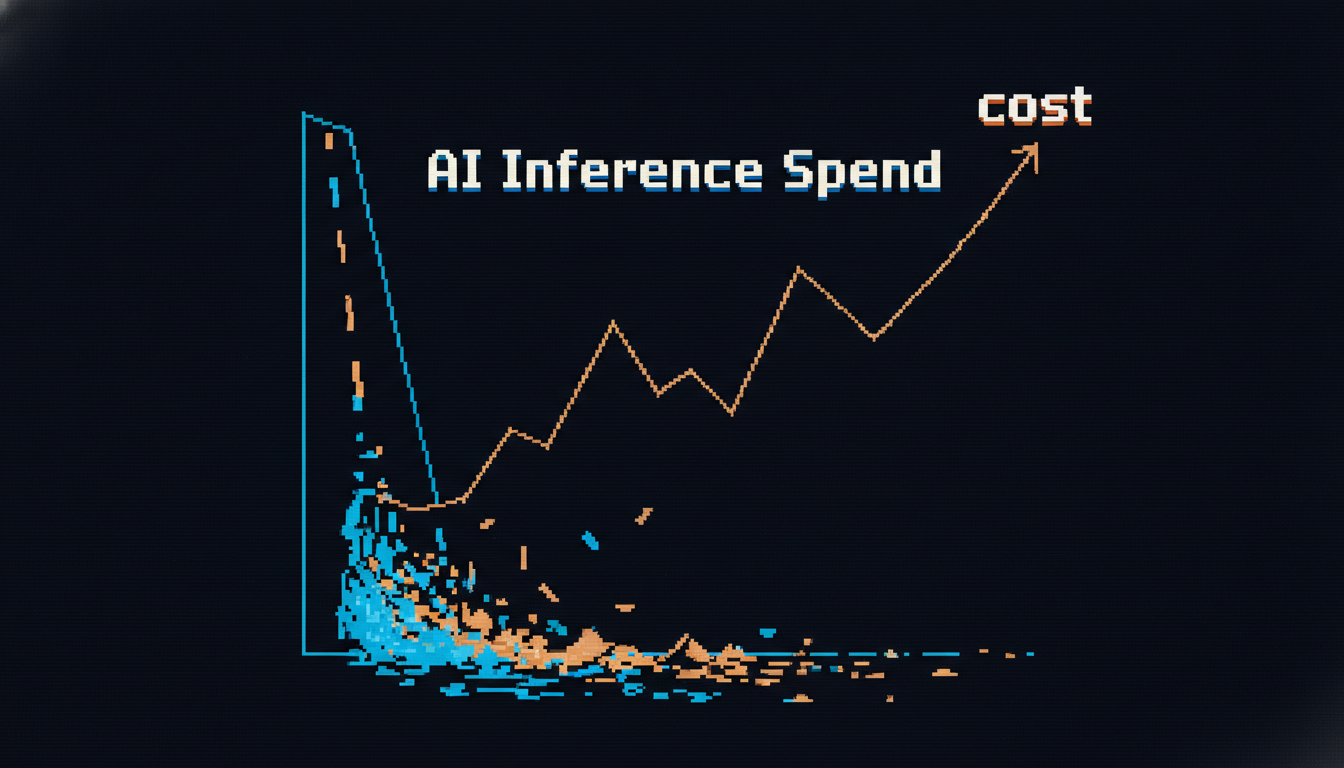
The new variable is inference. The strange thing is that the price of running a model has collapsed, some estimates put the drop at around 280x over two years, and yet AI bills are exploding. Usage outran the price cut. When something gets 280x cheaper, people use it 1,000x more.
The maths gets ugly fast. At roughly $1-15 per million tokens, an agent chewing through 500 million tokens a day costs about $15,000 a month, and a billion tokens a day pushes towards $360,000 a year at the low end, far more on premium models. A single agentic workflow running across hundreds of processes can quietly outpace the revenue it was meant to generate.
And it has a nasty failure mode. FinOps teams have reported a compromised API key taking a bill from zero to $10,000 in 30 minutes as an attacker ran inference against the most expensive models until they hit a ceiling. Cloud servers you forget about cost you slowly. A leaked AI key costs you in real time. No surprise that enterprises are now deferring around 25% of planned AI investment into 2027 while their CFOs demand actual ROI.
The 9 dos and don'ts for keeping cloud costs off your runway
Right. The practical bit. Each of these is something I've actually had to fix in a real codebase or a real account, not a best-practice listicle scraped off a vendor blog.
1. DO put a billing alarm and a spend ceiling on every account from day one. DON'T assume the cloud stops anything by itself
This is the cheapest insurance you'll ever buy and the one people skip. AWS, GCP and Azure will happily run an idle resource until the heat death of the universe and bill you for every second. As AWS itself spells out, you have to manually decommission resources, nothing auto-deletes. The famous example is freeCodeCamp's founder leaving an EC2 cluster running and landing a $7,000 bill. Set budget alerts, set hard caps on AI usage, and put alarms on anomalies before you write a single feature.
2. DO right-size before you scale. DON'T pad every resource request "to be safe"
This is the single biggest source of quiet waste, and the 2026 data is genuinely shocking. CAST AI measured tens of thousands of production Kubernetes clusters and found CPU utilisation at 8%, memory at 20%, and CPU over-provisioning leaping from 40% to 69% year on year. Separately, around 68% of pods over-provision memory by 3-8x. Engineers pad requests to dodge throttling, the padding is invisible to whoever pays, and nobody revisits it. You're paying for a Transit van to deliver a sandwich.
3. DO treat AI inference and GPU as your most dangerous line item. DON'T leave it uncapped
GPUs are where money disappears fastest. CAST AI found GPU utilisation at just 5%, with organisations assigning roughly 20x more GPU capacity than they actually use. An idle CPU core costs you cents per hour. An idle GPU costs dollars. Cap token spend per workflow, set per-key rate limits, cache aggressively, and route cheap tasks to cheap models. Structured AI workflows aren't only about code quality, they're about not waking up to a five-figure inference bill. That's a core part of how we run AI adoption for engineering teams: oversight on what the AI is allowed to touch, and what it's allowed to spend.
4. DO buy commitment discounts once usage is predictable. DON'T lock in reserved capacity before product-market fit
Reserved instances and savings plans are free money if your baseline load is stable, discounts of 30-70% sit there for the taking, and Flexera found fewer than half of organisations use even one commitment discount per provider. But the inverse trap is real: committing to three years of capacity at pre-PMF, when your architecture and load will change three times, locks you into paying for the wrong thing. Wait until you have a predictable floor, then commit to that floor and burst on-demand above it.
5. DO tag everything and watch egress. DON'T ignore data transfer between regions and services
Data transfer is the bill nobody reads until it bites. One reported case saw a Fortune 500 retailer hit with a $220,000 weekly spike from cross-region replication on untagged resources, with no alert firing. If you can't attribute a cost to a team, a feature or a customer, you can't manage it. Enforce a tagging policy from day one. Untagged spend is just future waste with a delay timer on it.
6. DO measure cost per customer, not just the total bill. DON'T optimise the headline number in a vacuum
The total bill going up isn't automatically bad, if you doubled customers and the bill went up 40%, your unit economics improved. The FinOps Foundation literally changed its mission in 2026 from "managing the value of cloud" to "managing the value of technology" for exactly this reason. Cloud cost per active customer, per transaction, per workflow, that's the metric that tells investors you understand your own business. A flat total bill hiding collapsing margins is the real danger.
7. DO kill zombie resources on a schedule. DON'T let "we'll clean it up later" rot in the account
Idle VMs, unattached storage volumes, orphaned elastic IPs, forgotten backups, dev environments nobody turned off. They accumulate silently. One reported startup's bill went $5k, then $32k, then $24k, £61k of damage over three months because they forgot to terminate instances. Run a monthly cleanup, automate shutdown of non-production environments out of hours, and treat orphaned resources like you'd treat an unlocked door. "Later" is where money goes to die.
8. DO match your architecture to your stage. DON'T run Kubernetes and microservices before you need them
A huge chunk of the over-provisioning above comes from teams running heavyweight infrastructure for a product that has 200 users. Kubernetes is a brilliant tool for the problem it solves, and most seed-stage startups do not have that problem yet. A boring, well-sized monolith on managed services will cost a fraction of a half-empty cluster and need a fraction of the babysitting. Lean architecture, designed before a line of code is written, is the whole point of CTO-led development, not the over-engineered stack an account manager can't push back on.
9. DO make cost someone's named job. DON'T treat it as an annual panic
FinOps is a culture, not a tool you install. Someone has to own the number, review it weekly, and have the authority to tell an engineer "no, you don't need that instance size." When nobody owns it, you get the 84% who struggle. When someone does, structured cost programmes report 25-30% reductions in monthly spend. For most startups that person isn't a full-time hire, it's a fractional CTO who looks at the bill the way a founder looks at the bank balance.
How a default cloud setup compares to CTO-led cost discipline
Here's the honest side-by-side. Both columns are real, plenty of teams run perfectly fine on the left for a while. The difference shows up when you scale, or when an investor opens your bill.
| Aspect | Default / "we'll deal with it" setup | CTO-led cost discipline (Metamindz) |
|---|---|---|
| Resource sizing | Padded "to be safe", revisited rarely (CPU at 8% utilisation) | Right-sized to real load, reviewed each sprint |
| AI / inference spend | Uncapped, per-key limits absent, surprise five-figure bills | Token caps, rate limits, cheap-model routing, anomaly alerts |
| Architecture | Kubernetes/microservices copied from a blog, half-empty clusters | Lean stack matched to stage, complexity added only when needed |
| Visibility | One total number nobody can decompose | Tagged, allocated, tracked as cost per customer |
| Commitments | All on-demand, or over-committed too early | Reserved/savings plans bought against a proven baseline |
| Zombie resources | Accumulate silently until a bill shock | Scheduled cleanup, non-prod auto-shutdown |
| Ownership | Nobody; reviewed in a panic before board meetings | One accountable owner reviewing weekly |
| Typical waste | 32-40% of spend | 15-20% of spend |
What this looks like in practice
When I run a cloud cost review, the first session is boring and brutal. We pull the last three months of billing, tag what isn't tagged, and find the dead resources. On almost every account there's a 20-30% cut available in week one without touching a single feature, just from killing zombies and right-sizing the obvious over-provisioning. That alone usually pays for the engagement several times over.
Then we get to the structural stuff: is the architecture right for the stage, is AI spend capped and monitored, who owns the number going forward. The point isn't to bolt me onto your payroll forever. The point is to fix the leaks, set up the guardrails, and hand it back to your team documented, so the bill doesn't quietly creep back up the moment I leave. That honesty, telling you when you don't need ongoing help, is exactly how a good fractional CTO should operate. We're hands-on, we dive into the actual account, and we tell you the truth about where your money's going.
Cloud spend isn't a tax you pay for existing. It's a controllable line item that, left alone, will eat months of runway you could've spent hiring, shipping, or just staying alive long enough to raise. Get the ceilings, the right-sizing, the tagging and the ownership in place, and the bill stops being the scariest document in the room. That's the whole game.
Frequently Asked Questions
Why did my cloud bill suddenly spike?
The usual suspects are idle resources left running, a new feature shipping uncapped, cross-region data transfer (egress) charges, or AI inference scaling faster than expected. A compromised API key can also run up huge inference charges in minutes. Set billing alarms and anomaly alerts so a spike pings you on day one, not at month-end.
How much of cloud spend is typically wasted?
Flexera's 2026 report estimates 29% of IaaS and PaaS spend is wasted, the first rise in five years, driven by AI workloads. Organisations without a structured cost practice waste 32-40%; mature FinOps programmes get that down to 15-20%. On a £20k monthly bill, that gap is roughly £4-5k saved every month.
How do I stop AI inference costs from blowing my budget?
Cap token spend per workflow, set per-API-key rate limits, cache common responses, and route simple tasks to cheaper models. GPUs sit at around 5% utilisation industry-wide, so right-size them hard. Treat AI keys as financial liabilities: rotate them, scope them, and alert on anomalies before an attacker or a runaway agent does the damage.
Do early-stage startups really need FinOps?
You don't need a FinOps team, you need FinOps habits. Billing alarms, tagging, monthly cleanup, and one person who owns the number. For most seed and Series A startups that owner is a fractional CTO, not a full-time hire. The discipline matters from your first £1k bill, because waste compounds as you scale.
Should I hire someone to manage cloud costs?
Rarely a full-time hire at early stage. A fractional CTO or a FinOps-literate engineer reviewing the bill weekly is usually enough, often paired with a tool like Vantage, CAST AI or CloudZero for visibility. The fastest win is a one-off cost review to kill waste and set guardrails, then light ongoing oversight to stop it creeping back.