
The Fractional CTO Boom: Most Founders Hire the Wrong One

The Fractional CTO Boom: Most Founders Hire the Wrong One
A fractional CTO is a senior technical leader you hire part-time, usually 4 to 20 hours a month, to own your engineering direction without the full-time salary or equity. Done right, they are embedded in your codebase and your Slack. Done wrong, you have paid top £££ for a monthly opinion while nothing ships.
So, look, everyone's a fractional CTO now.
Two years ago the title was rare. Now it's a LinkedIn headline template. And the numbers are genuinely mad: profiles using "fractional" next to a C-suite title went from around 2,000 in 2022 to over 110,000 by early 2024, a 5,400% increase in two years. In the UK, roughly one in five businesses now uses some form of fractional leadership, and Gartner expects 30%+ of midsize enterprises to have at least one fractional executive on retainer by 2027.
I've been doing fractional CTO work for years, well before it had a hashtag. So I'm not here to tell you it's a fad. It isn't. The model is brilliant when it fits. What I am telling you is that the boom has flooded the market with people who bolted "Fractional CTO" onto their profile the same week they got made redundant, and most founders can't tell the difference until three months and £15k of retainer have gone by.
Here's how to not be that founder.
Why the fractional CTO market exploded in 2026
Three things happened at once.
First, money got expensive and headcount got scary. A full-time CTO in London costs £200k to £350k all-in once you add equity, NI, and the rest. Most seed-stage startups cannot justify that before they've found product-market fit. A fractional arrangement runs at roughly 40 to 60% of that cost, and you can turn the dial up or down as you go.
Second, AI rewrote the job. Every founder I speak to is now trying to work out their AI strategy, their tooling budget, and whether their two engineers using Cursor and Claude Code are shipping gold or quietly building a security incident. That's a strategic technical question, and it's exactly the kind of thing a fractional CTO exists to answer. The AI/ML integration wave has pushed fractional CTO demand up 31% year on year, with placements typically taking six to eight weeks.
Third, the supply side caught up fast. When the C-suite went gig, thousands of experienced-and-not-so-experienced tech leaders realised they could sell their time by the day instead of the year. Great for choice. Terrible for signal-to-noise.

So the demand is real, the savings are real, and the timing makes sense. None of that helps you if you hire the wrong person. And the single biggest way founders get this wrong is confusing an advisor with an operator.
Advisor or operator? The distinction that actually matters
This is the whole game. There are two very different things being sold under the same title.
An advisor shows up to a monthly call, listens to your update, tells you what they'd do, and sends an invoice. Useful when you already have a strong team and just need a sounding board. An operator is embedded. They're in your GitHub reviewing PRs, in your Slack unblocking your engineers, in your Jira, and they know your team by name. They're accountable for outcomes, not for opinions.
The market has quietly decided which one people actually need. On the fractional job platforms, 92% of fractional CTO roles call for hands-on execution, not purely advisory work. Especially at early stage. If you're pre-Series A and you hire someone who only wants to do quarterly strategy reviews, you have hired a very expensive consultant and your roadmap will not move.
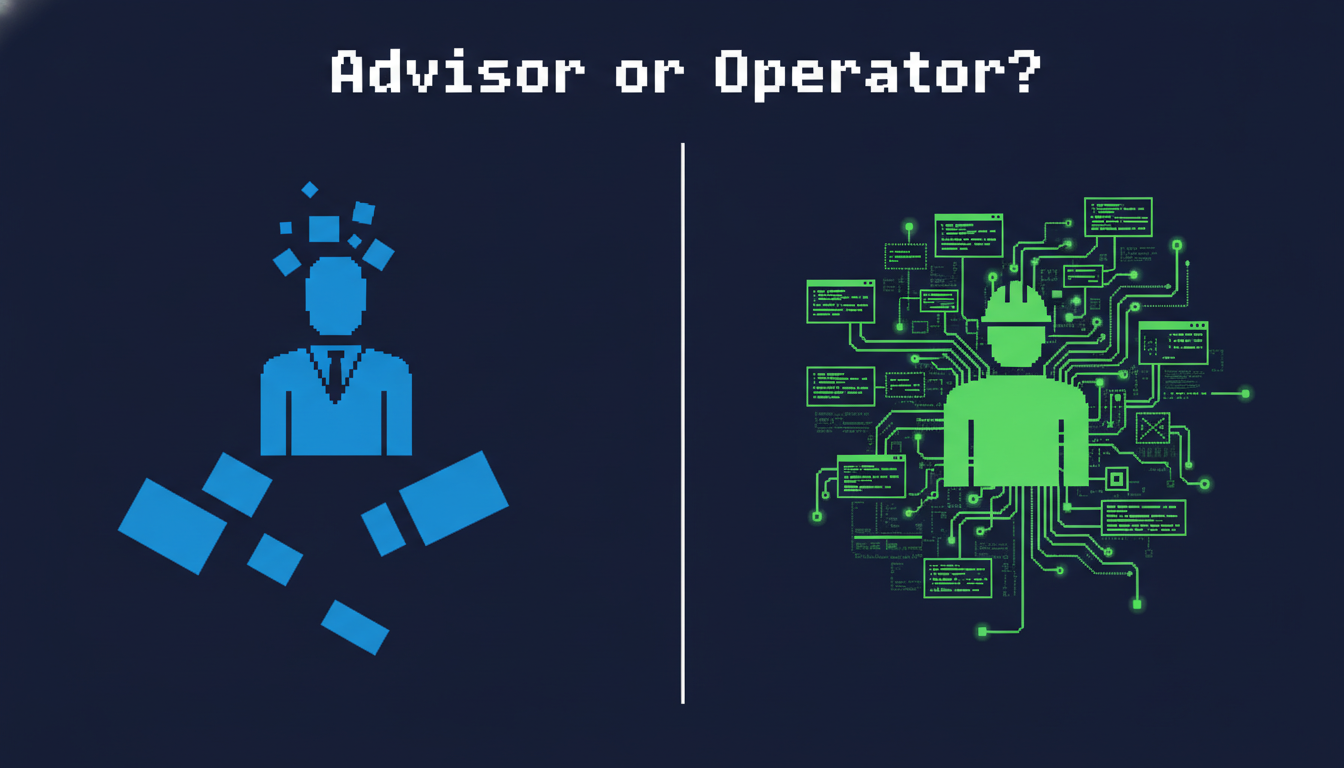
My own rule, after years of this: if I can't open your repo and tell you within a day where the bodies are buried, I'm not doing the job. Advice without diving into the actual code is just LinkedIn with a retainer attached. That's the whole reason we built CTO-as-a-Service at Metamindz around hands-on people who still write and review code, not around a slide deck.
Advisory-only vs hands-on CTO-led: what you're actually buying
Here's the honest comparison. Not every founder needs the right-hand column. But most who think they're buying it are getting the left.
| What you get | Advisory-only "fractional CTO" | Hands-on CTO-led (Metamindz) |
|---|---|---|
| Access to your codebase | Rarely opens the repo | Reviews PRs, audits architecture, screenshots the actual lines that need fixing |
| Engagement style | Monthly or quarterly calls | Embedded in Slack, GitHub and Jira, present at your key rituals |
| Accountability | Opinions and decks | Outcomes: things ship, the team unblocks, the architecture holds |
| Team management | Hands-off, advises the founder | Runs hiring, sets standards, manages internal and freelance devs |
| AI adoption | General "you should use AI" advice | Structured workflows, guardrails on auth and payments, real velocity gains |
| Honesty about fit | Keeps the retainer running regardless | Will tell you when you don't need us and point you elsewhere |
| Handover | Knowledge lives in their head | Documented, no vendor lock-in, hands over to your in-house team when ready |
How to hire a fractional CTO in 2026 without getting burned
Five things I'd check before signing anyone, me included.
1. Make them open your repo on the call. Not a case study from three years ago. Your code, live. A real operator will happily click through your architecture and start asking sharp questions within minutes. Someone who deflects to "let's discuss strategy first" is telling you something.
2. Nail down decision authority before day one. The number-one source of friction in fractional arrangements is ambiguity about who decides what. Write down which calls they can make alone, which need you, and which need the board. The fractional model breaks most often on this exact point, not on skill.
3. Think in presence, not hours. "20 hours a month" is a rubbish way to scope this. Think rhythm: at the Monday leadership meeting, in the Wednesday architecture review, on the release calls. Predictable presence beats a bucket of hours the team can't plan around.
4. Check they'll fire themselves. Ask directly: when would you tell me I don't need you? If they can't answer, they're optimising for the retainer, not for you. If your infrastructure is genuinely on fire, you don't need a fractional CTO at all, you need a full-time one. Ten to twenty hours a month cannot babysit a live crisis.
5. Separate the CTO from the recruiter from the agency. A lot of "fractional CTO" offers are really a funnel to sell you a dev shop or a recruitment fee. Fine, if it's transparent. Not fine when the "independent advice" always concludes you should hire their team. We keep recruitment and software delivery as separate, CTO-led services precisely so the advice stays honest.
When you should NOT hire a fractional CTO
Because someone has to say it. A fractional CTO is the wrong call if you're deep in an operational crisis that needs daily sustained attention, if you're at a scale where technical leadership is genuinely a full-time-plus job, or if what you actually need is one more mid-level engineer, not a leader. The best fractional CTOs will tell you this on the first call. It's the fastest way to spot a good one: they'll happily talk themselves out of your money when it's the right thing to do. That honesty is the point, and it's the same instinct we bring to a technical due diligence engagement, where the job is to tell investors the truth, not the comfortable version.
What this means for founders and investors
The fractional CTO boom is one of the better things to happen to early-stage tech. It means a bootstrapped founder in Marylebone can get proper technical leadership for the price of a decent contractor, and turn it off when they've hired in-house. That's a genuinely good deal.
But a booming market attracts people selling the label without the substance. The London median CTO contractor day rate hit £1,350 in February 2026. At those numbers, "I'll join your monthly call" is not good enough. You want someone who'll get their hands dirty, tell you the truth, and leave you stronger than they found you. Everything else is theatre with an invoice.
If you want the hands-on version, that's the only version we do. Start with a free, no-obligation call and we'll tell you honestly whether you even need us: metamindz.co.uk/services/cto-as-a-service.
Frequently Asked Questions
What does a fractional CTO cost in the UK in 2026?
UK fractional CTO rates run roughly £1,000 to £1,600 per day, or £3,000 to £7,000 per month on retainer, with the London median contractor rate around £1,350 per day. That's about 40 to 60% of a full-time CTO's £200k to £350k all-in annual cost, and you can scale the hours up or down.
What is the difference between a fractional CTO and an advisor?
An advisor gives opinions on scheduled calls and stays out of the day-to-day. A fractional CTO is embedded: in your GitHub, Slack and Jira, accountable for outcomes, and hands-on with your codebase and team. Around 92% of fractional CTO roles now demand hands-on execution rather than pure advice.
How many hours a month does a fractional CTO work?
Typically 4 to 20 hours a month, adjustable as your needs change. But scope it by presence, not raw hours. What matters is that they're reliably at your key meetings and reviews, so the team can plan around them, rather than burning a fixed hour budget unpredictably.
When should I hire a full-time CTO instead?
Hire full-time when technical leadership is genuinely a daily, sustained job: you're in an operational crisis, scaling fast past Series A, or the role needs constant hands-on presence. A fractional engagement of 10 to 20 hours a month cannot babysit a live crisis. A good fractional CTO will tell you when you've reached this point.
How do I know if a fractional CTO is any good?
Make them open your actual repo on the first call and watch how fast they ask sharp questions. Pin down decision authority upfront. And ask directly when they'd tell you that you don't need them. A real operator will happily talk themselves out of your retainer when it's the right thing to do.