
Shadow AI Is Already in Your Codebase: The Dos and Don'ts Every CTO Needs Right Now

Shadow AI is the unsanctioned use of AI tools, agents, and coding assistants inside your organisation without IT approval, security review, or governance oversight. In 2026, 98% of organisations have employees using unsanctioned AI tools, 45% of developers admit to using unapproved code assistants, and the average shadow AI breach costs $4.63 million. If you're a CTO or technical leader who hasn't audited your team's AI tool usage yet, you're almost certainly exposed.
Your Developers Are Already Using AI Tools You Don't Know About
So.. here's the uncomfortable truth. Your developers are almost certainly using AI coding tools you haven't approved.
I see this in nearly every engagement. A startup brings me in as a fractional CTO, I do an initial audit, and within the first week I find code that's clearly been generated by tools nobody mentioned during onboarding. Not because the developers are being malicious - they're trying to be productive. A Sonar report from 2026 found that 35% of developers access AI tools through personal accounts rather than work-sanctioned ones. For ChatGPT specifically, that number jumps to 52%.
The motivation is simple: a January 2026 survey found that 60% of employees said using unsanctioned AI is worth the security risk if it helps them meet a deadline. Worth the risk. That's a governance problem hiding behind a productivity win.
The parallel to the old shadow IT problem is obvious, but shadow AI is worse. With shadow IT, someone might spin up an unapproved SaaS tool and put some project data in it. With shadow AI, your developers are feeding proprietary source code, database schemas, API keys, and business logic into models hosted on personal free-tier accounts. Harmonic Security found that 16.9% of sensitive data exposures - 98,034 instances - happened on personal free-tier accounts completely invisible to IT.
Why Shadow AI Code Is Worse Than Traditional Shadow IT
I've been doing technical due diligence for investors for years. Shadow IT used to be a minor line item - someone using Trello instead of Jira, a rogue Slack workspace. Annoying, but contained.
Shadow AI is a fundamentally different beast.
First, the data exposure is bidirectional. When a developer pastes code into an unapproved AI tool, they're not just storing data somewhere insecure - they're potentially training a model on it. Your proprietary logic, your customers' data, your security implementation details. Gone.
Second, the code that comes back is unvetted. No security review. No architecture review. No check against your existing patterns and standards. VentureBeat's 2026 analysis called shadow AI-generated code "the new S3 bucket crisis" - and they're right. Just as misconfigured S3 buckets exposed billions of records in the 2010s, ungoverned AI-generated code is creating the next wave of breaches.
Third, it's invisible to your existing security tooling. IBM's 2025 Cost of a Data Breach Report found that shadow AI breaches take an average of 247 days to detect - six days longer than standard breaches. And 97% of organisations that reported AI-related breaches lacked proper AI access controls.
The Real Numbers: How Much Shadow AI Is Costing You
Let me put some specifics on this, because vague warnings don't change behaviour.
| Metric | Number | Source |
|---|---|---|
| Organisations with unsanctioned AI use | 98% | Vectra AI 2026 |
| Developers using unapproved code assistants | 45% | Sonar 2026 |
| Average shadow AI breach cost | $4.63M | IBM Cost of a Data Breach 2025 |
| Additional breach cost from shadow AI | +$670K | IBM Cost of a Data Breach 2025 |
| Days to detect shadow AI breach | 247 | IBM Cost of a Data Breach 2025 |
| Orgs with AI governance policies | 37% | Security Boulevard 2026 |
| Annual insider risk cost per org | $19.5M | Netwrix 2026 |
| Employees who say shadow AI is worth the risk | 60% | Help Net Security 2026 |
That last row is the one that should worry you most. Your team isn't being negligent - they genuinely believe the productivity gain is worth the risk. Which means banning AI tools outright won't work. They'll just hide it better.
The Dos and Don'ts of Managing Shadow AI in Your Codebase
I've worked with about a dozen startups and scaleups on this exact problem in 2026 alone. Here's what actually works and what doesn't.
DO: Run a shadow AI discovery audit in the first 30 days
You can't govern what you can't see. Start with a basic audit: what AI tools are your developers actually using? Not what's in your procurement records - what's actually running on their machines, in their browser extensions, in their IDE plugins.
A recommended 90-day governance framework breaks this into three phases: month one is discovery and visibility, month two is policy and guardrails, month three is operational auditing. I'd compress that timeline for startups - you can do discovery in a week if you're hands-on.
At Metamindz, when we come in as fractional CTOs, the AI tool audit is now a standard part of our first-week assessment. It wasn't two years ago. It is now.
DON'T: Ban AI coding tools outright
This is the mistake I see most often. A CISO or VP of Engineering reads a scary report about shadow AI, panics, and sends a company-wide email: "No AI tools until further notice."
This achieves precisely nothing. Developers will use personal accounts, personal devices, or just not tell you. The 60% who said shadow AI is worth the risk? They're not going to stop because you sent an email. You'll just lose visibility entirely.
DO: Provide sanctioned AI tools with proper enterprise controls
The single most effective move is giving your team the tools they want, but through proper channels. GitHub Copilot Business vs personal accounts is the clearest example - Copilot Business has data retention policies, IP indemnification, and your code doesn't train the model. Personal Copilot? None of that.
The cost difference is negligible compared to the risk. If you're paying developers £65,000-£80,000 a year, the £150-£300 annual cost of a proper enterprise AI coding tool licence is rounding error.
DON'T: Assume your existing security tools will catch AI-generated code issues
Traditional SAST and SCA tools were built for human-written code. AI-generated code has different failure patterns - hallucinated dependencies, hardcoded credentials in unexpected places, broken object-level authorisation patterns that static analysis doesn't flag. Only 34% of organisations with AI governance policies actually perform regular audits for unsanctioned AI tools.
You need AI-specific code review processes layered on top of your existing security toolchain. Tools like Apiiro, Snyk, and CodeRabbit are starting to build AI-code-specific detection, but the tooling is still maturing. Human review by someone who understands AI code patterns is still the gold standard.
DO: Create a clear AI acceptable use policy - and make it short
67% of employees are unaware of their organisation's AI policy. Usually because the policy is either nonexistent or buried in a 40-page document nobody reads.
Write a one-page AI acceptable use policy. Cover four things: what tools are approved, what data can go into them, what review process AI-generated code must pass, and what happens if someone uses unapproved tools. The answer to that last one should be "we help you migrate to the approved version", not "you're fired". Make the right thing easy and the wrong thing visible.
DON'T: Ignore the EU AI Act implications
If you're building software that's used in the EU - and if you're a UK startup, you almost certainly are - the EU AI Act is relevant. The high-risk system requirements were originally due August 2026 but have been pushed to December 2027. That's a reprieve, not a pardon. If your AI-assisted code touches employment decisions, credit scoring, education, or healthcare, you'll need to demonstrate governance, risk management, and human oversight.
Shadow AI makes EU AI Act compliance impossible. You can't document your AI usage if you don't know what AI your team is using. Penalties for prohibited practices reach up to €35 million or 7% of global annual turnover - whichever is higher.
DO: Build AI governance into your tech DD preparation
For any startup preparing for fundraising: investors are now asking about AI governance during technical due diligence. I've seen it in every tech DD engagement this year. "What AI tools does your team use?" "How do you govern AI-generated code?" "What's your AI acceptable use policy?"
If your answer is "we don't know" because shadow AI is running unchecked, that's a red flag that can delay or kill a deal. 70% of investors now require tech DD before committing, and AI governance is a standard checklist item in 2026.
DON'T: Treat this as purely an IT/security problem
Shadow AI is a leadership problem. It exists because developers need to be productive and your organisation hasn't provided proper channels. Throwing it over the wall to IT security and hoping they'll sort it out doesn't work.
This needs CTO-level ownership. Someone technical enough to evaluate the tools, strategic enough to set policy, and trusted enough by the engineering team that they'll actually follow it. That's a CTO's job - not a CISO's, not an IT manager's.

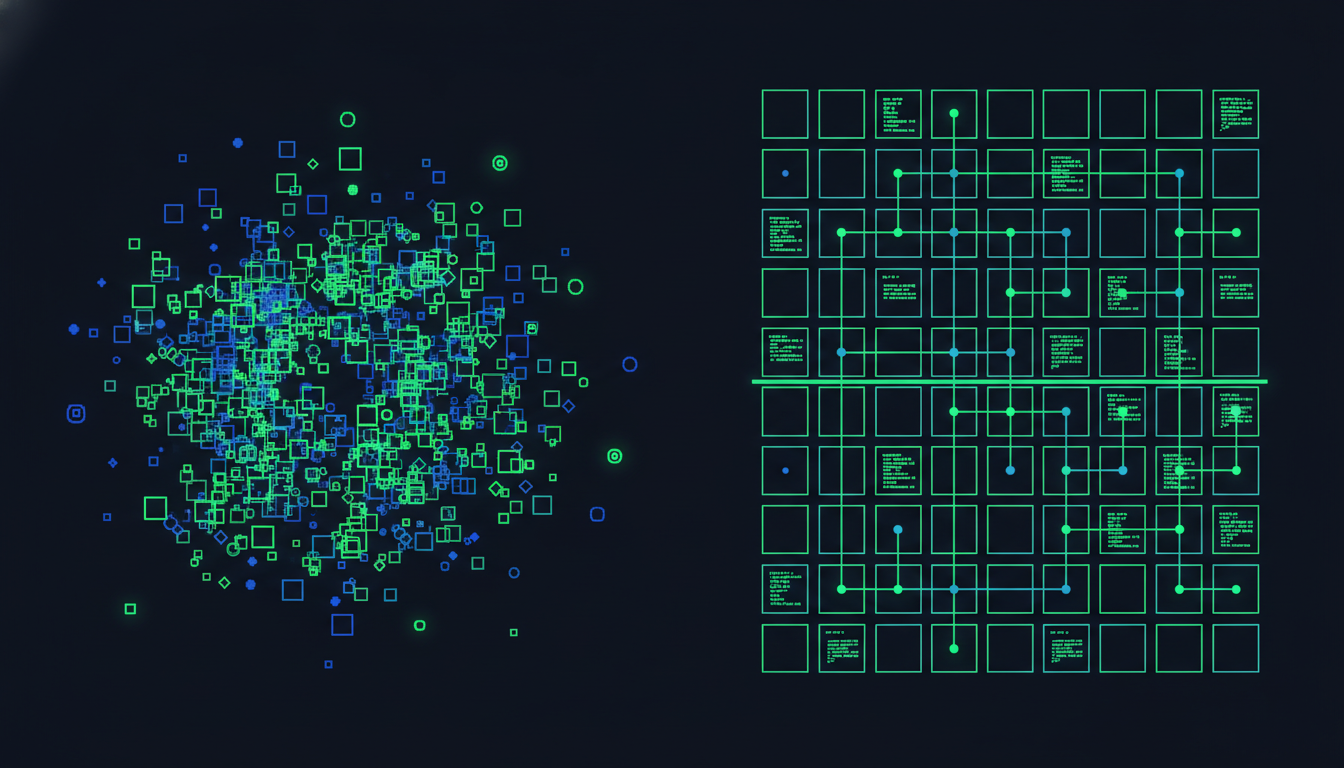
Governed vs Ungoverned AI Tool Usage: What the Difference Looks Like
| Area | Ungoverned (Shadow AI) | Governed (CTO-Led Approach) |
|---|---|---|
| Tool access | Personal accounts, free tiers, browser extensions | Enterprise licences with data retention controls |
| Code review | AI code mixed in with no flag or marker | AI-generated code tagged and routed through specific review |
| Data exposure | Proprietary code sent to unknown models | Approved models with data processing agreements |
| Security scanning | Standard SAST only - misses AI-specific patterns | AI-specific scanning layered on standard tools |
| Policy | No policy, or 40-page doc nobody reads | One-page acceptable use policy, reviewed quarterly |
| Compliance | EU AI Act compliance impossible to demonstrate | Full audit trail of AI usage across the SDLC |
| Incident detection | 247 days average (IBM) | Continuous monitoring with real-time alerts |
| Cost of breach | $4.63M average | Standard breach cost with faster containment |
| Investor confidence | Red flag during tech DD | Demonstrates maturity and risk awareness |
| Developer satisfaction | Productive but anxious about getting caught | Productive with proper support and no fear |
What I'd Do in Your First Week
If I walked into your company tomorrow as your fractional CTO, here's what I'd do in the first five days:
Day 1-2: Anonymous survey to the engineering team. "What AI tools do you use? Personal or company account? What type of data goes in?" Make it anonymous. You'll get honest answers.
Day 3: Audit browser extensions, IDE plugins, and CLI tools across the team. Check for personal Copilot, ChatGPT, Claude, Cursor, and Codeium accounts.
Day 4: Map the findings. How much of your codebase has likely been AI-assisted? What data has been exposed? What's your actual risk surface?
Day 5: Draft the one-page AI acceptable use policy. Get sign-off from the CEO. Announce approved tools with enterprise licences. No blame for past usage - just a clear line going forward.
Total cost: one week of a fractional CTO's time at £800-£1,350 per day. Compare that to the $4.63M average shadow AI breach cost, and it's the cheapest insurance you'll ever buy.
At Metamindz, we've built this into our AI adoption service - structured AI workflows with governance baked in from day one. Not because governance is exciting, but because the alternative is a $4.63M problem you really don't want.
If you're a CTO, founder, or investor and you haven't audited your team's AI tool usage yet - start this week. The developers aren't going to stop using these tools. Your job is to make sure they're using them safely. That's not a security problem. That's a leadership one.
Frequently Asked Questions
What is shadow AI in software development?
Shadow AI is the use of AI coding tools, assistants, and agents by developers without formal IT approval or security oversight. This includes personal ChatGPT accounts, free-tier Copilot, browser-based coding assistants, and any AI tool not provisioned through your organisation's procurement and security process. In 2026, 98% of organisations have employees using unsanctioned AI tools.
How much does a shadow AI data breach cost?
According to IBM's 2025 Cost of a Data Breach Report, shadow AI adds an average of $670,000 to breach costs, bringing the total average to $4.63 million. Shadow AI breaches also take 247 days to detect on average - six days longer than standard breaches - because the tools and data flows are invisible to existing security monitoring.
Should I ban AI coding tools to prevent shadow AI?
No. Banning AI tools outright pushes usage underground and eliminates your visibility. 60% of employees say using unsanctioned AI is worth the security risk to meet deadlines. Instead, provide sanctioned enterprise-grade AI tools with proper data controls, create a clear one-page acceptable use policy, and build AI-specific code review processes into your workflow.
How does shadow AI affect technical due diligence?
Shadow AI is now a standard audit item in technical due diligence for investors. If your team can't demonstrate what AI tools are in use, how AI-generated code is governed, and what data has been exposed to external models, it raises red flags about security maturity and regulatory compliance - potentially delaying or derailing funding rounds.
Does the EU AI Act apply to shadow AI coding tools?
Yes. The EU AI Act requires organisations to document and govern their AI usage, particularly for high-risk applications in employment, healthcare, and finance. Shadow AI makes compliance impossible because you can't document tools you don't know about. While the high-risk deadline has been pushed to December 2027, organisations should start governance now. Penalties reach up to €35 million or 7% of global annual turnover.