
Founders Reject Musk's xAI Offer, Opt for Independence in AI Tech Race
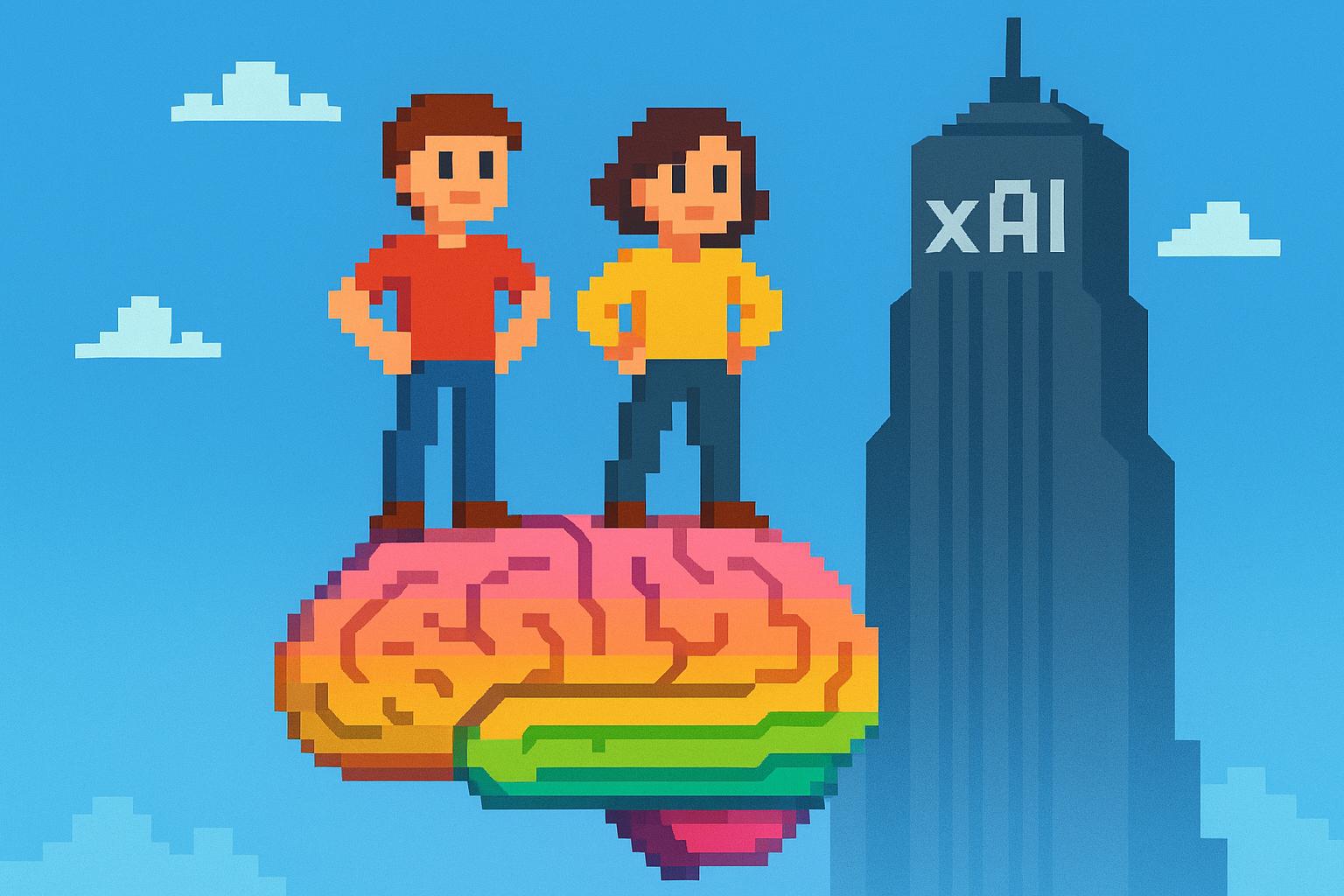
Founders Reject Musk's xAI Offer, Opt for Independence in AI Tech Race
Two young tech innovators, William Chen and Guan Wang, have chosen to chart their own course in the competitive field of artificial intelligence, rejecting a lucrative multi-million dollar offer from Elon Musk’s xAI. The bold decision has set the stage for their start-up, Sapient Inc., to emerge as a noteworthy challenger in the race to develop Artificial General Intelligence (AGI).
The 24-year-old founders, who first met as high school students in Michigan, made headlines when they turned down Musk’s recruitment offer two years ago. This approach followed the unexpected success of their initial AI model, OpenChat, which gained significant attention for its novel design and academic impact.
A Revolutionary Approach to AI
"We decided that large-language models have their limitations", said Chen, explaining the duo’s reasoning for rejecting the xAI deal. "We want a new architecture that will overcome the structural limitation of [large-scale machine learning]."
Their efforts are now focused on the Hierarchical Reasoning Model (HRM), a unique technology inspired by human cognition. The HRM is designed to mimic the brain’s dual approach to problem-solving: combining fast, instinctive responses with slower, deliberate reasoning. This idea, rooted in research pioneered at Tsinghua University in Beijing, is what drives Sapient’s vision for AGI - a machine capable of performing any cognitive task at or above the level of human intelligence.
Chen and Wang’s first creation, OpenChat, achieved prominence for its unconventional approach during a time when large-scale data-heavy training sets dominated the AI landscape. OpenChat was built using a deliberately small and highly curated set of conversations and trained through reinforcement learning, a process where models learn by receiving rewards and penalties for their actions. Open-sourcing the model led to widespread academic interest, with researchers from institutions like Berkeley and Stanford citing the work.
sbb-itb-fe42743
A Calculated Risk for Independence
The surprising attention OpenChat garnered prompted an unsolicited recruitment email from xAI, reportedly offering Chen and Wang a "multi-million dollar pay package." Despite the tempting opportunity, the founders prioritised their independent vision over the allure of joining Musk’s firm.
Their conviction was validated when a prototype of the HRM outperformed models like GPT-4, Claude, and DeepSeek in specific reasoning-focused benchmarks. Remarkably, an experimental version of the HRM containing only 27 million parameters - a fraction of the size of its competitors - excelled at tasks such as solving complex Sudoku puzzles.
"It was crazy", Chen remarked, describing the breakthrough performance of the HRM. Unlike the widely-used transformer architectures that rely on statistical word prediction, the HRM’s experimental two-part recurrent structure appears to lend it superior reasoning capabilities.
Charting a New Path in AGI Development
Chen and Wang’s approach positions their company, Sapient Inc., as a critical alternative to the dominant large-language model paradigm that has dominated Silicon Valley. While OpenAI, Anthropic, and other AI giants continue to focus on scaling up LLMs, Sapient is taking a more targeted route by addressing the fundamental structural limitations of existing models.
The start-up has ambitious plans to expand its operations, including establishing an office in the United States to support the scaling of its groundbreaking HRM technology. As the AI field continues to evolve, Sapient Inc. is betting on its innovative architecture to redefine the path toward AGI, firmly standing by its founders’ decision to prioritise independence over immediate financial gain.
By rejecting Musk’s offer, Chen and Wang have underscored their commitment to creating a transformative AI technology on their own terms - a decision that could reshape the landscape of artificial intelligence as we know it.