Frameworks
We ask candidates to explain rendering and component lifecycles, choose sensible server and client boundaries, and debug a feature that rerenders or fetches more often than expected.
- React
- Next.js
- Angular
- Angular 12

UK, Europe, USA
Developer-led recruitment for frontend engineers who can turn product requirements into reliable interfaces.
Technical screening by developers and CTOs is included.
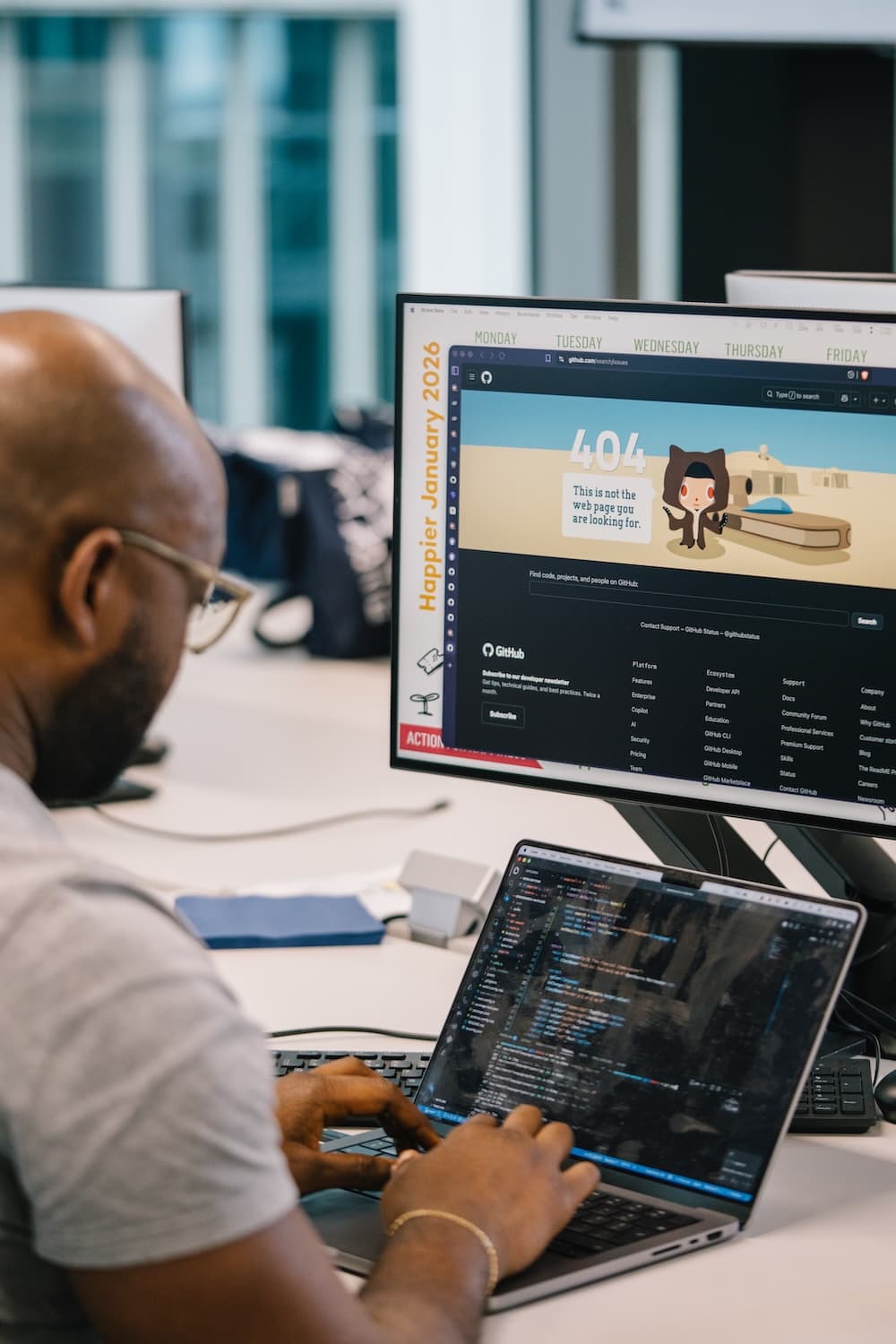
We recruit frontend developers across modern JavaScript and TypeScript stacks. Senior developers assess framework knowledge, browser fundamentals, state management, accessibility, testing and the engineering choices behind a polished interface.
When to hire Frontend developers: A product team expanding frontend capacity. A framework migration or rebuild. A senior frontend owner for a growing application.
We have recruited against frontend briefs spanning framework-heavy applications, design-system work, server-rendered products and mixed frontend-backend environments.
We ask candidates to explain rendering and component lifecycles, choose sensible server and client boundaries, and debug a feature that rerenders or fetches more often than expected.
We probe TypeScript modelling, browser semantics, accessibility and responsive CSS with concrete questions about focus order, layout behaviour and type-safe component APIs.
We ask candidates to decide what belongs in local, server or shared state, design a complex form and explain how they would test and optimise the resulting application.
We look for engineers who care about the person using the interface, can discuss trade-offs constructively with designers and communicate implementation constraints without becoming defensive or overly attached to one solution.
The interview focuses on how candidates build, debug and maintain user-facing software, not whether they can repeat framework terminology.
JavaScript, TypeScript, rendering behaviour, performance and accessibility fundamentals.
State boundaries, component design, data fetching and maintainable frontend structure.
Testing, collaboration with design, production debugging and practical trade-offs.
Tool names are not enough. Across every role, we look for technical depth, disciplined use of AI and an honest approach to solving unfamiliar problems.
We keep asking why and how until we reach the underlying behaviour. Candidates should understand what their framework, runtime, database, browser, cloud service or design tool is doing for them, how they work behind the scenes (and why), and how they would investigate a failure without relying on copying fixes from ChatGPT.
We expect candidates to use AI productively, but never as a substitute for judgement. They need to explain how they verify generated code, designs and tests, protect confidential data, catch unsafe assumptions and remain accountable for the result. We expect them to use MCPs, skills, and goals. So basically - we are looking for structured AI-assisted work, not vibe coding, vibe designing or vibe testing.
Strong candidates have a can-do mindset and will investigate, experiment and learn when the answer is not obvious. At the same time, they are fair and transparent about what they know, what they have not done before and when they need support.
Give us a few details about the role and your hiring plans. We'll assess your needs and get back to you with a practical next step.
Our completed briefs have included React, Next.js, Angular and Angular 12, alongside TypeScript, JavaScript and modern styling and state-management tools.
Yes. Senior developers and CTOs support the recruitment team and assess the candidate against the actual frontend environment.
Yes. We recruit for teams across the UK, Europe and the USA, including remote and location-specific searches.